
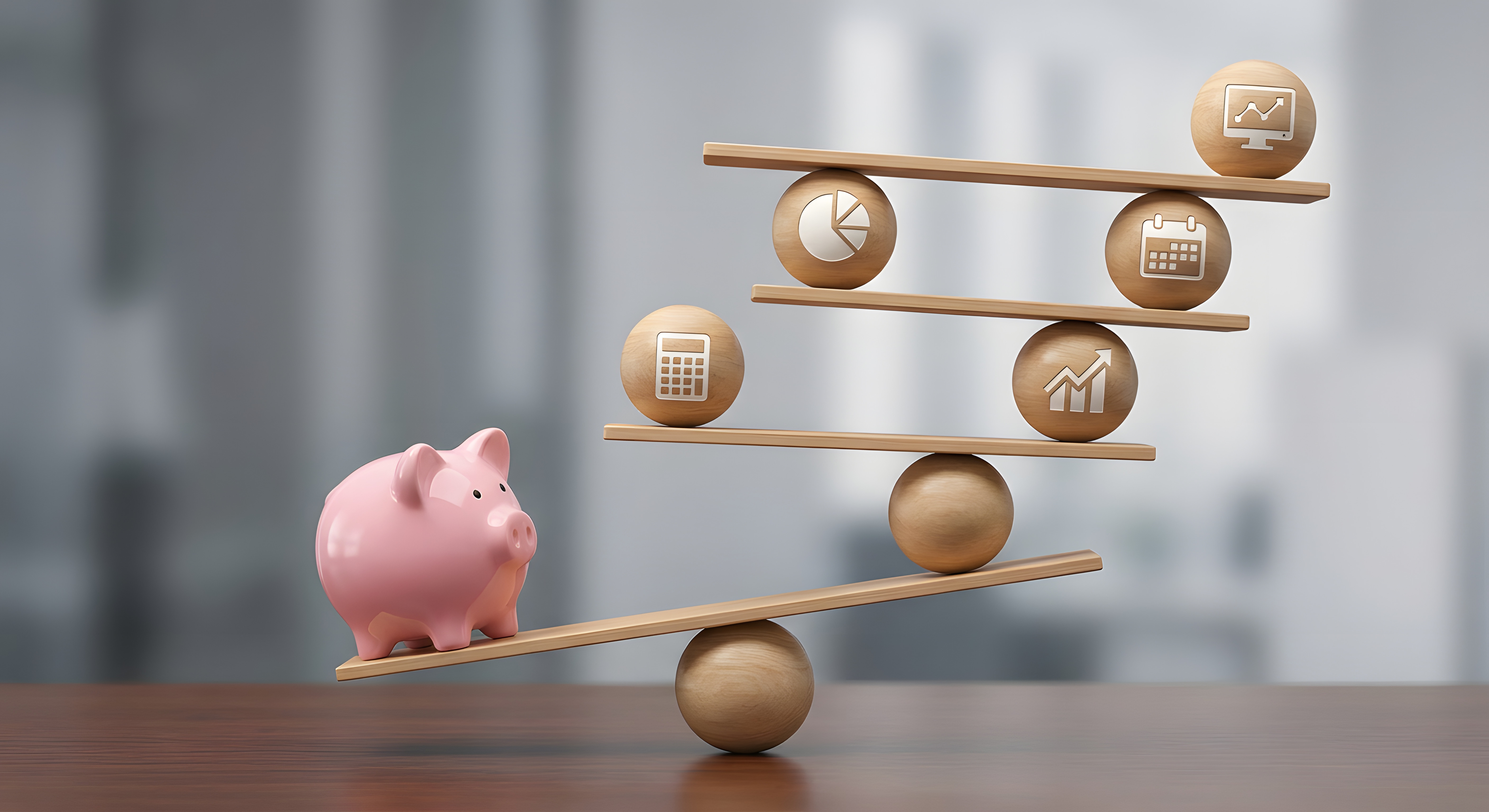
The Canadian government has given us the gift of registered accounts that we can use to save on taxes, shelter our investments from capital gains, and save money for our first home. Choosing the right account for your income, goals, and life stage, can feel overwhelming. Understanding how each registered account works, and when each one may help the most, can bring clarity and confidence to your financial plan.
Comparing Registered Accounts
RRSP: Designed for retirement and tax reduction during higher-income years. It can also support first-time home buyers.
TFSA: Flexible, tax-free growth for short- and long-term goals.
FHSA: Built specifically to help first-time buyers save for a down payment, with powerful tax advantages.
What Is an RRSP?
A Registered Retirement Savings Plan (RRSP) is best used when you have a goal of owning a home or when your income is high and you want to reduce your taxes.
Key RRSP benefits:
❖ The amount you contribute to your RRSP is tax deductible when you file your taxes
❖ Investments in the account grow tax-deferred until you withdraw the funds
❖ It is most valuable during higher-income earning years when you have a high tax bracket
❖ Can also support first-time home ownership through the Home Buyers’Plan (HBP)
Under the Home Buyers’ Plan, first-time home buyers can withdraw up to$60,000 per person from their RRSP to buy or build a qualifying first home.These withdrawals are not taxed at the time they are taken, as long as they are repaid back to the RRSP over time. This makes the RRSP a dual-purpose tool for both retirement savings and home ownership planning.RRSPs are commonly used by professionals, business owners, and families earning higher household incomes who want to reduce taxes now while keeping future options open. Withdrawals in retirement are taxed as income, which may work well if you expect to be in a lower tax bracket later.
Best suited for:
❖ Mid to late career professionals
❖ Families with strong cash flow
❖ First-time home buyers combining RRSP and FHSA strategies
❖ Anyone earning higher income and planning for retirement
What Is a TFSA?
A Tax-Free Savings Account (TFSA) offers flexibility and tax-free growth, making it one of the most versatile tools in Canadian financial planning.
Key TFSA benefits:
❖ Withdrawals from the account do not affect government benefits or your taxable income
❖ New contribution opens annually
❖ Investment growth and withdrawals within the account are tax-free
❖ Funds can be accessed at any time without tax consequences
TFSAs can be used for emergency savings, investing, supplementing retirement income, or short- to medium-term goals. Because withdrawals do not affect taxable income, they are especially useful in retirement planning and for income smoothing.Best suited for:
❖ Young professionals starting to save
❖ Families building flexibility into their plan
❖ Retirees managing tax-efficient income
What Is an FHSA?
The First Home Savings Account (FHSA) is a newer account designed specifically to help first-time home buyers save for a down payment.
Key FHSA benefits:
❖ Similar to an RRSP, contributions are tax-deductible
❖ Withdrawals for a qualifying first home are tax-free, similar to a TFSA
❖ Contribution room of $8000 opens annually with a lifetime contribution limit of $40,000
The FHSA can be a powerful planning tool for individuals or couples planning to buy their first home in the coming years, especially those with stable income who want both tax relief and flexibility.
Best suited for:
❖ First-time home buyers
❖ Young professionals with clear home ownership goals
❖ Couples saving together for a future purchase
Which Account Should You Prioritize?
There is no one-size-fits-all answer. The right strategy often depends on your income, goals, and stage of life.
❖ Early career or lower income: TFSA and FHSA often come first
❖ Mid-career and higher income: RRSP combined with TFSA planning may help reduce taxes and build retirement income
❖ Planning to buy your first home: FHSA paired with to maximize your down payment contribution
A well-built financial plan often uses all three accounts at different times, with coordination that aligns savings, taxes, and future goals.
Frequently Asked Questions
Can I have an RRSP, TFSA, and FHSA at the same time?
Yes. Many Canadians benefit from using all three accounts at different stages of life. Each serves a different purpose and can work together in a coordinated financial plan.
Should I use an FHSA or RRSP first when saving for my first home?
For many first-time buyers, the FHSA is often a starting point because contributions may be tax-deductible and qualifying withdrawals are tax-free.RRSPs can also play a role through the Home Buyers’ Plan, especially for higher-income earners.
What happens if I do not repay my RRSP Home Buyers’ Plan withdrawals?
There is a pre-defined amount you will have to repay over 15 years. If required repayments are missed, the amount may be added to your taxable income for that year. It is best to prioritize annual repayments first before contributing to other accounts.
Is a TFSA only for short-term savings?
No. While TFSAs are excellent for emergency or short-term goals, they are also widely used for long-term investing and tax-free retirement income.
How do I decide which account is best for my income level?
RRSPs, TFSAs, and FHSAs are not competing tools, they are complementary. This depends on your current tax rate, future income expectations, and goals.
At MNK Financial Services, we help families, professionals, and business owners build personalized strategies that align these accounts with real life goals and changing income over time. If you would like help deciding which account makes sense for you right now, please contact MNK FinancialServices at care@mnkfinancial.com to create a financial plan.
Written by:

About the author:
Manish Kanani B.Sc., CLU, CH.F.C., CFP, CIM
Portfolio Manager, Managing Partner
Q WEALTH PARTNERS
35 years of wealth experience

